The functional groups of comb-shaped polymers self-assemble with the medium and long-chain alkanes and asphaltenes in crude oil, effectively preventing the fusion of wax crystals and the agglomeration of asphaltenes and resins in crude oil or petroleum products, thereby enhancing the low-temperature fluidity of crude oil and significantly reducing its viscosity. By adjusting the types of specific functional groups, multi-domain applications can be realized.scope of application:I. Pipeline Transportation and Pigging Supporting Technologies
Existing Problems: To reduce the viscosity of heavy oil during transportation, current technologies include: 1. Heating technology; 2. Dilution of heavy oil with light oil; 3. Additive technology (emulsion viscosity reduction transportation and pour point depressant modified transportation). Currently, methods involving adding light oil or heating are commonly used, but they are costly and energy-intensive!
Solution: Smart amphoteric comb-shaped polymer molecules adsorb on the surface of asphaltene or resin aggregates in the form of molecular self-assembly, allowing them to disperse in crude oil at sizes below micrometers. Without stopping the transportation, adding this type of comb-shaped polymer can strip most of the oil sludge deposited on the pipeline surface, while significantly improving the oil transportation capacity. Our construction cases show that after implementing comb-shaped polymers and supporting technologies, the pipeline transportation pressure has significantly decreased, the flow rate has increased, and large chunks of oil sludge have been stripped from the end of the oil pipe.
Additionally, we have also developed supporting technologies for the treatment of spilled crude oil, using the comb-shaped polymer-enhanced water washing extraction separation technology, achieving cleaning
effects on spilled oil sands and oil sludge that meet national environmental protection technology requirements.II. Heavy Oil and High Pour Point Oil Lifting Supporting Technologies
Existing Problems: As the formation temperature decreases, heavy oil or high pour point oil can easily solidify and plug the wellbore during lifting. Currently, dilution with light oil or heating is commonly used, but they are costly and energy-intensive! Light oil in oil fields is increasingly scarce! And blockage accidents can occur, leading to production shutdowns.
Solution: Develop lifting supporting technologies for heavy oil and high pour point oil within the wellbore. By utilizing the comb-shaped polymer droplet wellbore viscosity reduction technology, the current electrical heating and dilution with light oil methods can be replaced, allowing crude oil to be lifted to the surface at a lower cost. At the same time, it can prevent the deposition of wax crystals and the accumulation of asphaltenes in crude oil. Under conditions where the temperature is below the wax precipitation point and the pour point of crude oil, it can still prevent the crude oil from solidifying and plugging the pipe wall and perforations. Gradually eliminate electrical heating and dilution with light oil, reduce energy consumption, and lower production costs.
III. Supporting Technologies in the Field of Crude Oil Extraction (Including Heavy Oil and High Pour Point Oil)
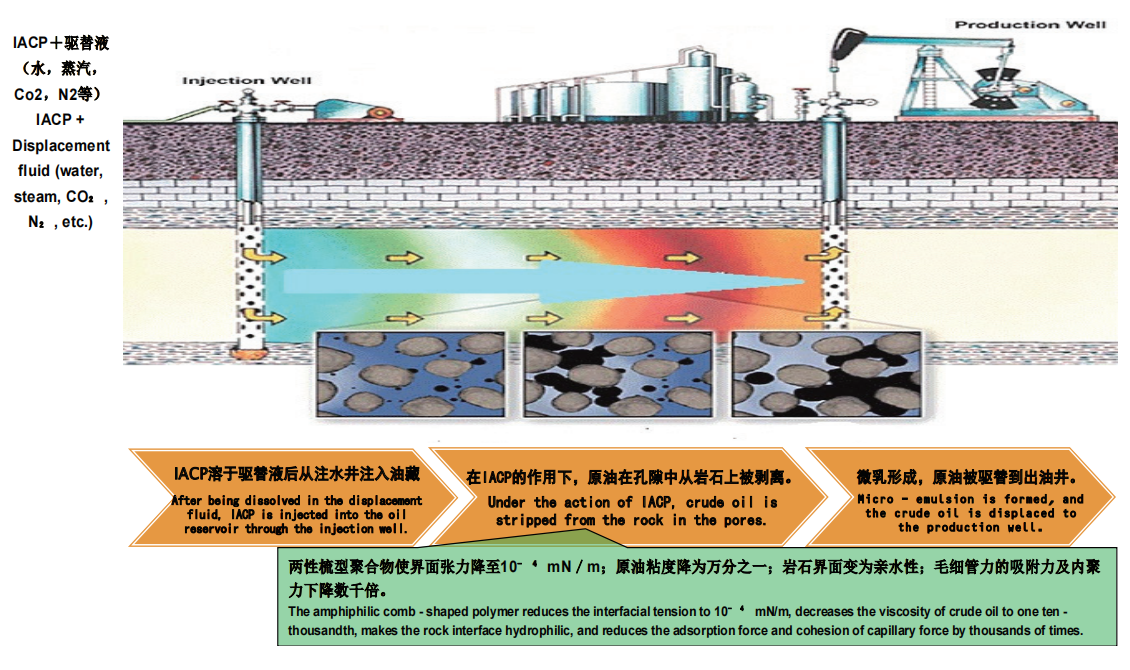
Existing Problems: After primary extraction and water flooding, more than 60% of the crude oil remains in the pore structure of the rock. The existing oil displacement processes have not effectively improved the
recovery rate! The reservoir structure is significantly damaged! Energy consumption is high!
Solution: Intelligent amphiphilic comb-shaped polymers can reduce the viscosity of crude oil by 95% - 99.99%, lower the oil-water interfacial tension to 10^{-4} mN/m, adjust the wettability of the rock, making
the surface change from oil-wet to water-wet, and the adsorption force and cohesion of capillary pressure decrease by thousands of times. It enables cold production, reduces energy consumption, increases the oil�water ratio, and improves the recovery rate. By adopting this supporting technology, the dominant position of thermal recovery will be fundamentally broken, thereby enhancing the economics of oil fields and extending the production period.
IV. Product performance
The crude oil viscosity reduction rate has reached 95% - 99.99%; it can be customized for different oils with varying asphaltene and resin content; the temperature-resistant product is effective within a wide temperature
range of 0 - 300°C; the yield stress is reduced by more than 80%; the amphiphilicity is adjustable, enabling it to dissolve in water or oil; the oil-water interfacial tension is reduced (to 10^{-4} mN/m); low dosage (1:1000 - 3:1000); it can be used in conjunction with existing processes, or in combination with CO2, N2, and natural gas, as a hybrid flooding agent; environmentally friendly, free of heavy metals, free of acids or bases, pH 7, does not affect the refining of downstream products; recovery rate is increased by 15% - 30%, production is increased by 15% - 40%, energy consumption is reduced by more than 20%, and the input-output ratio can reach 1:5.
Ⅴ. Application for Enhanced Oil Recovery
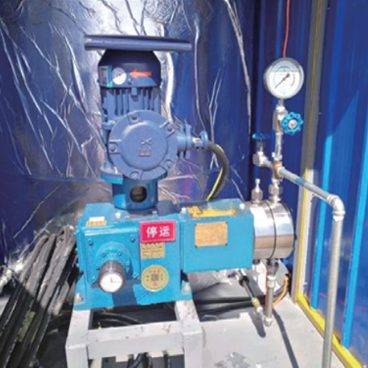
Field application:
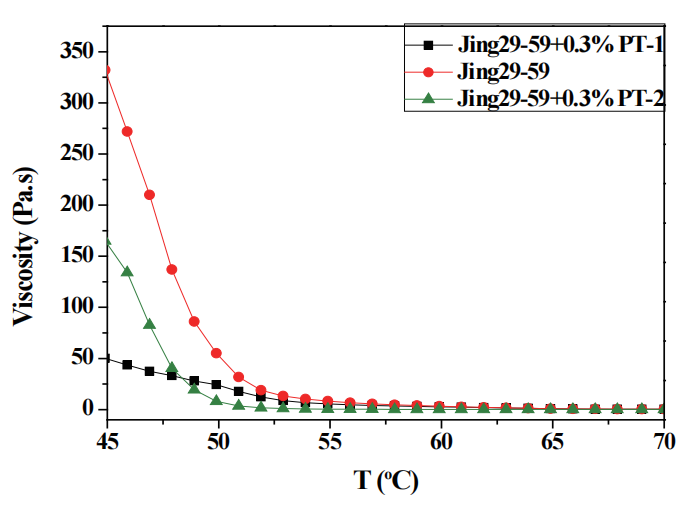
Test results:
1. The viscosity of Liaohe high pour point crude oil significantly decreases at low temperatures.
2. The pour point of Liaohe high pour point crude oil is notably reduced, and after adding PT-1, the pour point becomes almost unnoticeable.Case Study of On-site Construction for Heavy Oil in Shucai Area - Viscosity Reduction and Lift of Well Du813 Block-35-6:
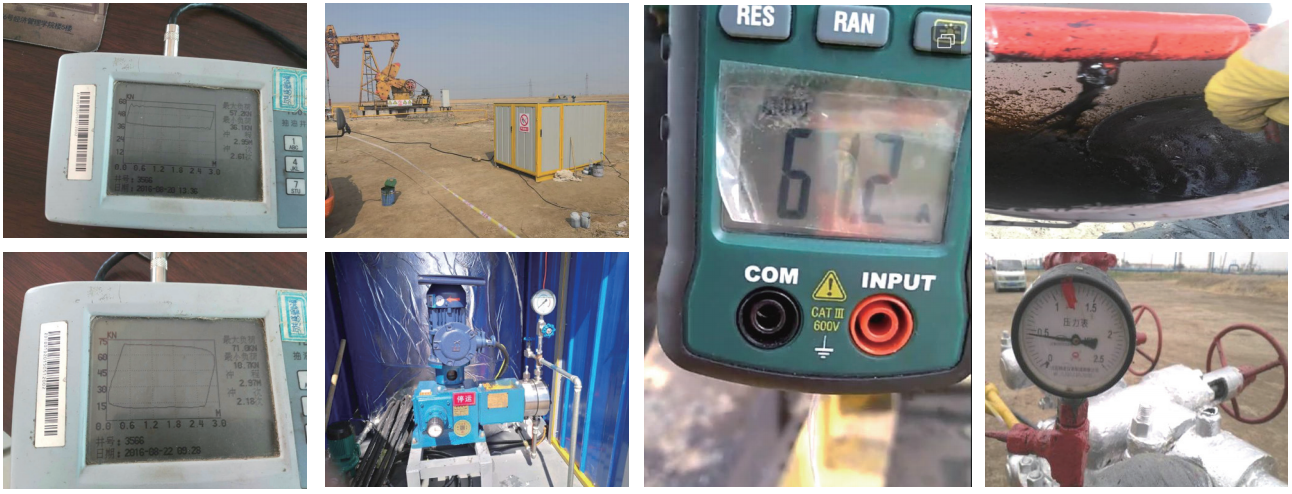
The daily liquid production of this well was 5 tons, with 2 tons of oil, viscosity of 170,000 mPa.s, liquid level at 400 meters, and pump hanging at 800 meters before the measure. The well adopted water circulation heating and the production mode of well washing and intermittent injection of chemicals into the casing. After the measure, the daily liquid production increased to 10 tons, with 5 tons of oil.The viscosity at 50℃ measured in the laboratory dropped to 38,000 mPa.s. The on-site wellhead temperature was 68℃, and the on-site viscosity was 2,700 mPa.s. This signifcantly reduced the production cost and did not affect the demulsifcation at the joint station.



 中文
中文
